
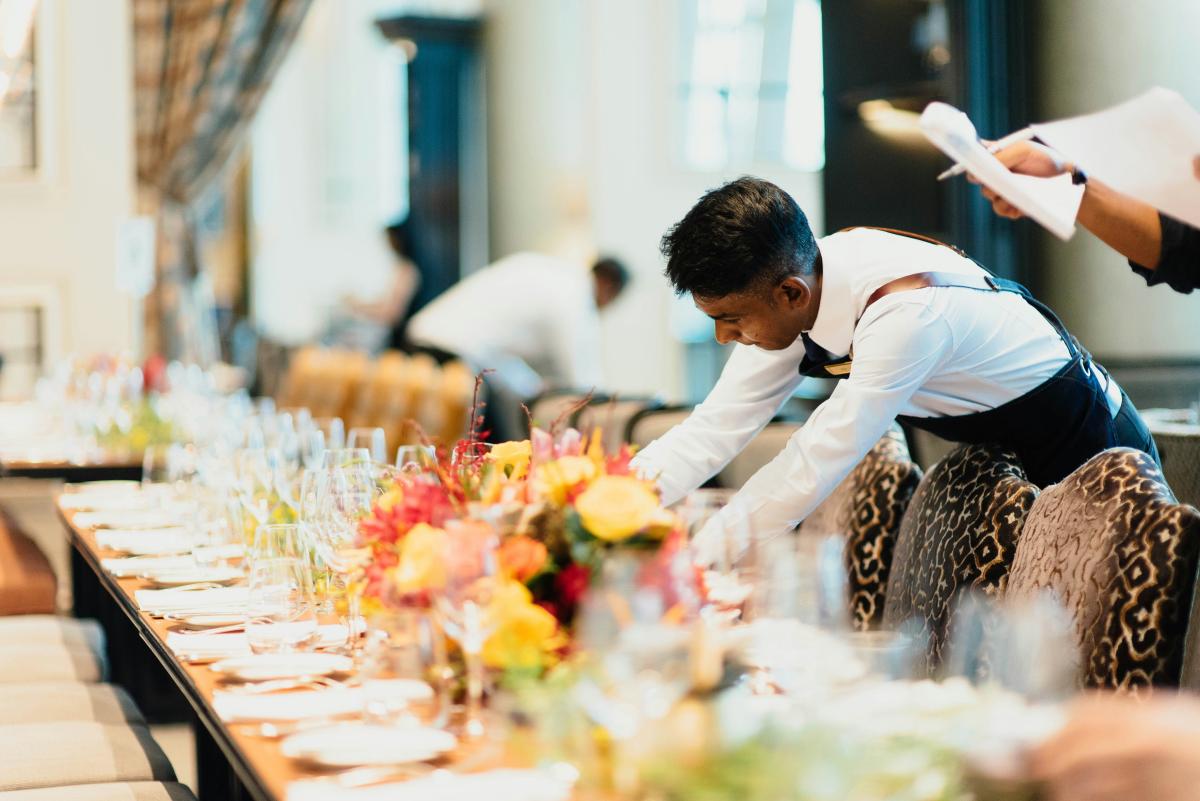

Quick answer: A wedding caterer should be judged on three things: whether they can safely hold food at temperature for the length of your reception, whether they can handle your guests' allergies without a last-minute scramble, and whether their quote covers staff, rentals and service charges — or just the food. The tasting tells you almost none of this. It tells you the food is good on a Tuesday afternoon for four people, which is the easiest version of the job they will ever do.
TL;DR
- The tasting is a sales meeting. Judge the logistics instead.
- Ask how they hold food between plating and serving — the USDA "Danger Zone" is 40°F to 140°F, and food should never sit out more than two hours.
- Get allergy protocols in writing. There are nine major allergens recognized in the US, and sesame only joined the list in 2023.
- Make every quote itemize staff, rentals, service charge and gratuity, or you cannot compare them.
- A caterer who publishes real menus and pricing online is telling you something about how they operate.
Why Isn't the Tasting Enough?
Because a tasting is a controlled demo: four plates, plated to order, served immediately, in the caterer's own kitchen with their best cook on the line.
Your reception is 140 plates that have to leave a kitchen — sometimes a tent with a rented convection oven — and arrive hot, at the same time, ninety minutes after the ceremony ran long. Those are different problems. The tasting proves the recipe works. It proves nothing about the operation.
So use the tasting for what it's good for: deciding whether you like the food and whether you like the people. Then ask the questions below, which are the ones that actually predict how the day goes.
What Should You Ask About Food Safety?
This is the least romantic part of wedding planning, and the one most worth twenty minutes of your attention. The CDC estimates that 48 million Americans get sick from foodborne illness each year — roughly one in six. A wedding, where food is prepped early and held for hours, is a higher-risk setup than most dinners.
Ask these three questions:
"How do you hold hot food between plating and service?"
You want to hear chafing dishes, preheated steam tables or warming cabinets. The USDA is specific: bacteria multiply fastest between 40°F and 140°F, doubling in as little as 20 minutes. Hot food stays at or above 140°F, cold food at or below 40°F, and nothing sits out more than two hours — one hour if you're doing an August outdoor reception above 90°F.
"What's your plan if the ceremony runs late?"
Every wedding runs late. A caterer who hasn't thought about the thirty-minute delay is a caterer who will serve you lukewarm chicken.
"Who's handling leftovers?"
If you want food sent home with guests, that needs a plan — shallow containers, refrigerated within two hours. Most venues have a policy. Ask early.
A good caterer will answer all three without hesitating, because they think about this constantly. A vague answer is the answer.
How Should a Caterer Handle Allergies and Dietary Restrictions?
Badly handled, this is the single most likely way a guest ends up in an emergency room on your wedding day. Handled well, nobody notices anything happened at all.
The US recognizes nine major food allergens — milk, eggs, fish, crustacean shellfish, tree nuts, peanuts, wheat, soybeans and sesame, which was added as the ninth allergen effective January 1, 2023. That last one catches caterers out more than you'd expect, because sesame hides in bread, dressings and spice blends.
What you want to hear:
- Allergy meals are prepped on separate surfaces with separate utensils, not just picked around.
- The affected guest's plate is hand-delivered by a server who knows whose it is — not left for a runner to guess.
- They want your final dietary list roughly two weeks out, not two days.
What should worry you: "Just let us know on the day," or any version of "we can pick the nuts out."
What Does a Real Quote Look Like?
Catering quotes are notoriously hard to compare because caterers price differently on purpose. Force them into the same shape.
Line Item: Food
What to Check: Priced per person, by menu selection
Line Item: Staff
What to Check: Number of servers, hours, rate per hour
Line Item: Rentals
What to Check: Linens, china, glassware, flatware — if not provided by the venue
Line Item: Service charge
What to Check: An operations fee, usually 18–22% — not gratuity
Line Item: Gratuity
What to Check: A separate line; ask whether it's expected on top
The service-charge-versus-gratuity confusion is where budgets quietly break. Two quotes that look $2,000 apart can end up identical once you resolve it — and occasionally the cheaper-looking one comes out ahead.
Ask for the staffing ratio explicitly. For a plated dinner you generally want one server per 15–20 guests; buffets need fewer servers but more runners. A caterer bidding low on staff is bidding low on how fast your guests eat.
What Can You Learn From a Caterer's Website?
More than you'd think, and it costs you nothing.
A caterer who publishes actual menus — with actual items, actual portion sizes, ideally actual prices — is a caterer who has standardized their operation. They know what they cost. They're not building every quote from scratch and hoping. If you want a sense of the format worth looking for, Toronto-based McEwan Catering for weddings publishes full menus openly rather than gating them behind an inquiry form, so you can see the range and the price point before you've spent an evening on a consultation.
The opposite signal — a gallery of beautiful photos, no menus, no pricing, "contact us for a custom proposal" — isn't disqualifying. Plenty of excellent caterers work that way. But it means you'll spend three meetings learning what a published menu would have told you in five minutes, and you should factor that time in when comparing vendors on a deadline.
Also check: do they list the venues they've worked? A caterer who has already worked your venue knows where the power outlets are, how far the kitchen is from the tent, and whether the freight elevator is a nightmare. That's worth real money.
Frequently Asked Questions
How far in advance should we book a wedding caterer? Nine to twelve months for a peak-season Saturday, and the good ones book earlier than that. Off-season and weekday weddings have far more availability.
Should we do a buffet or a plated dinner to save money? Buffets save on service staff but usually cost more in food, because you have to over-produce so the last table isn't looking at empty trays. The savings are smaller than people expect — often a wash.
Is a service charge the same as a tip? No. A service charge covers the caterer's operational costs and typically does not go to the serving staff. Ask directly whether gratuity is included or expected separately, and get the answer in the contract.
What if a guest has a severe allergy we find out about late? Tell the caterer the moment you know, even the day before. A professional kitchen can almost always accommodate a late addition — what they cannot do is fix it after the plate has already gone out.
Do we need to feed the photographer and the band? Yes, and it should be in your contract with them. Ask your caterer about vendor meal pricing, which is usually cheaper than a guest
are you a bride or groom-to-be?
We'd love to plan with you on weddingday-online.com. Let's get started!
are you a wedding extraordinaire?
Join WeddingDay Magazine in inspiring brides by partnering with us! See how here.


Custom Suit Info
WeddingDay | September 18, 2026

How to Style Your Bridesmaids
WeddingDay | September 4, 2026

Summer Wedding Decor
WeddingDay | August 26, 2026



Pro Spotlight: Four Winds
Kaitlyn Smale | August 21, 2026

Wedding Planning Tips
WeddingDay | August 11, 2026
Join the conversation
Log in or register to post comments