
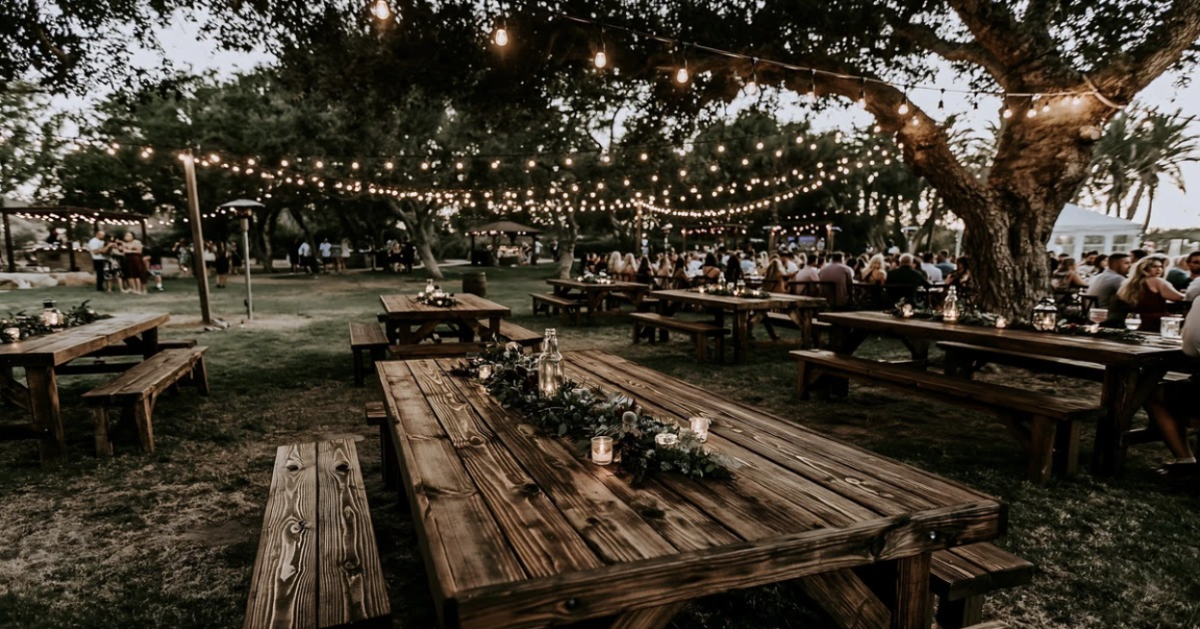

Rustic wedding ideas for barns, farms and orchards, from the ceremony to the last dance, along with the practical side nobody pins: power, parking, bugs, weather and keeping candles away from the straw.
In short: a rustic wedding leans on natural materials, a relaxed country setting and seasonal flowers. To keep it from looking dated, pick one or two signature materials instead of putting burlap on everything, stay with two or three colors and light the space warmly. Then sort out the practical details early: restrooms, power, parking, a weather plan and flameless candles anywhere near straw or dry wood.
Drive through northern Indiana or Southwest Michigan in October and you’ll pass more barn venues than you can count: restored dairy barns, family farms, orchards and new venues built to look a century old. There’s one for every guest list and budget. The hard part isn’t finding rustic wedding ideas. It’s picking the ones that will still look good in your photos ten years from now.
Below you’ll find 30 ideas for the ceremony, the reception, the flowers, the food, the signs and what to wear, along with how to plan a rustic wedding so the day runs as smoothly as it looks.
What is a rustic wedding?
A rustic wedding takes its cues from the countryside: wood, natural textures, greenery, seasonal flowers and a relaxed, unfussy feel. It usually happens in a barn, on a farm, in an orchard or somewhere outdoors, though wood, greenery and candlelight can bring the same feel to a hotel ballroom too.
It has a few close cousins. Boho rustic adds macramé, pampas grass and dried flowers. Modern farmhouses stick to white, black and natural wood with clean lines. Country western brings in leather, boots, cowhide and a ranch feel. Most rustic weddings borrow a little from each, which is fine, as long as the result looks like the two of you rather than a mood board.
How to plan a rustic wedding
Rustic venues are beautiful partly because they aren’t purpose-built ballrooms, and that’s also why they take more planning. Work through these steps before you spend a minute on decor.
1. Choose your setting. A converted barn venue usually comes with restrooms, power, tables and a coordinator. A working farm, an orchard or family land gives you more freedom and a longer to-do list, from rentals to parking. If you’re hosting on private land, check with your county about permits for a large gathering and ask your insurance agent about a one-day event policy. If there’s a bar, ask whether the policy includes liquor liability, which is often sold as an add-on.
2. Ask the barn questions. How much power is there, and where are the outlets? Can the circuits run the caterer’s equipment, the band and the lights at the same time, or will you need a generator? Are there real restrooms, or will you need a restroom trailer? Is the barn heated, cooled or neither? What time does the music have to stop? Are open flames, confetti or nails in the beams allowed? How many cars can park, and where? On a working farm, ask where the animals will be that day too. Livestock bring flies and smells along with the charm.
3. Plan for the weather. Midwest summers bring heat, humidity and afternoon thunderstorms, and fall evenings cool down fast. Know exactly where the ceremony moves if it rains, who makes the call and by what time, and budget for fans in summer or patio heaters in fall. WeddingDay’s advice on how to plan for the unpredictable covers outdoor ceremonies in more detail.
4. Pick your season and palette early. Late spring means peonies, summer means sunflowers and zinnias, and late summer into fall brings dahlias, mums and turning leaves. Your season decides your flowers, and your flowers shape your colors, so settle the date before you fall for a palette that won’t be in bloom.
5. Book rentals early. Farm tables, chairs, a dance floor, lighting, linens, a generator and a restroom trailer all book up fast for September and October. A lot of the items in WeddingDay’s guide to backyard wedding essentials, from portable toilets to grass protection mats, apply just as well on a farm.
6. Plan how guests get there. Farm venues often sit down long country roads with spotty cell service, and GPS doesn’t always find a farm lane. Put clear directions on your wedding website, mark out the parking, consider a shuttle for a big guest list and put up signs at every turn. If most guests are staying at a hotel in town, a shuttle also means nobody has to drive those dark roads home after the bar closes.
Rustic wedding ideas for the ceremony
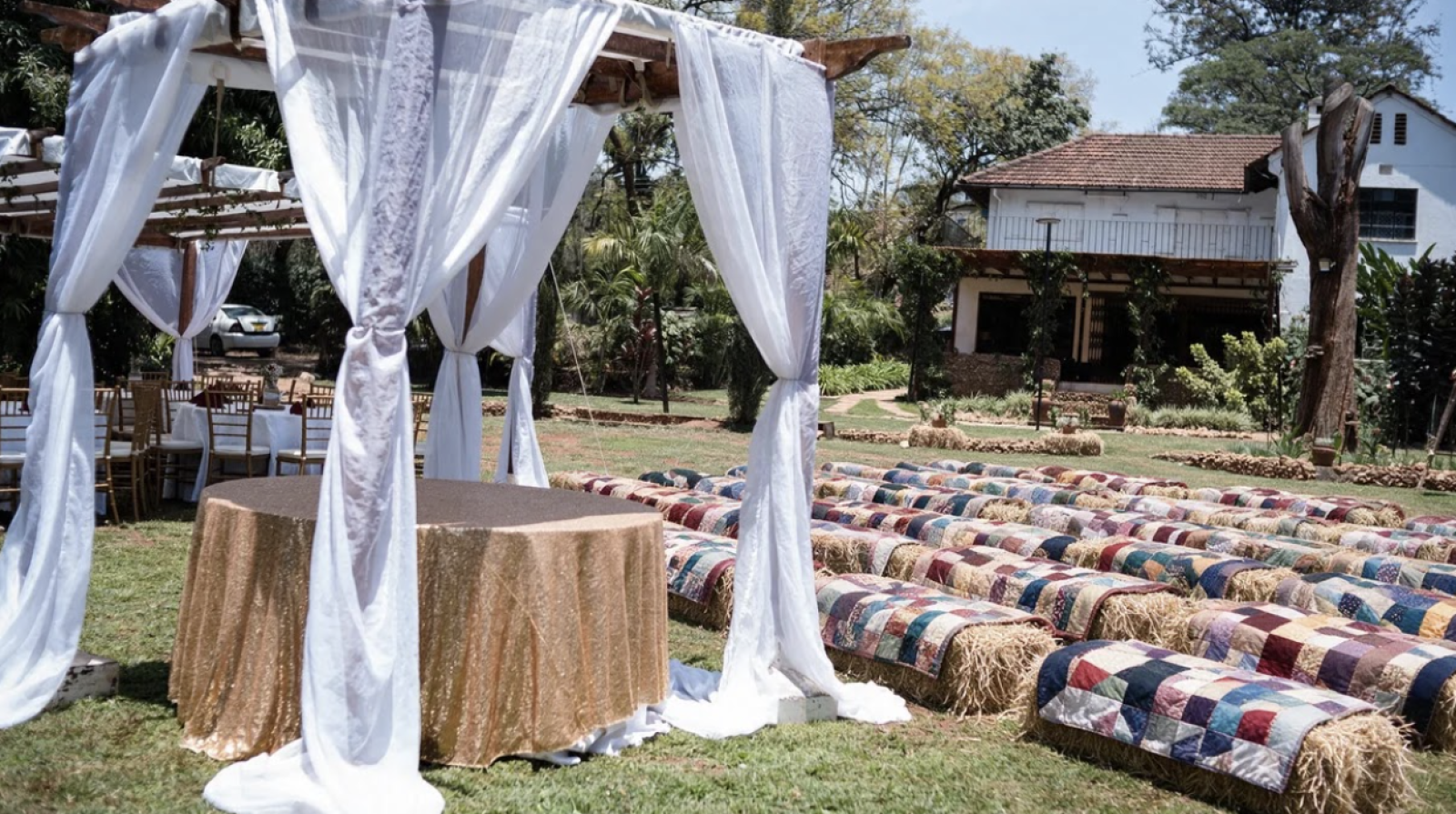
1. Straw bales or wooden benches
Bales covered with blankets or quilts make charming ceremony seating, and they double as lounge seating later. Ask for straw rather than hay. Straw is the dried stalks left after a grain harvest, while hay is cut grass grown as animal feed, so straw is usually the cheaper of the two and carries less of the pollen and seed that set off hay fever. Cover every bale, because loose straw snags tights and dresses. Wooden benches or a mix of vintage chairs work better for older guests who need a back to lean on.
2. A wooden arbor or a barn door backdrop
A simple wooden arbor draped with greenery frames the ceremony without blocking the view of the fields behind you. If the weather moves you inside, a pair of old barn doors, a wall of hanging greenery or the barn’s own big doors flung open make an easy backdrop. Ask your florist to build the arbor greenery so it can be carried inside in sections, and the rain plan won’t need its own flowers.
3. Say “I do” in the field or orchard
The barn is gorgeous, but the land around it is what guests remember. Hold the ceremony in a meadow, at the edge of a field or under orchard trees, with the barn ready as your rain plan. Ask the venue to mow a path for the aisle a few days before so it’s easy to walk in any shoes, and ask whether the grass gets treated for ticks and mosquitoes that week.
4. Time it for golden hour
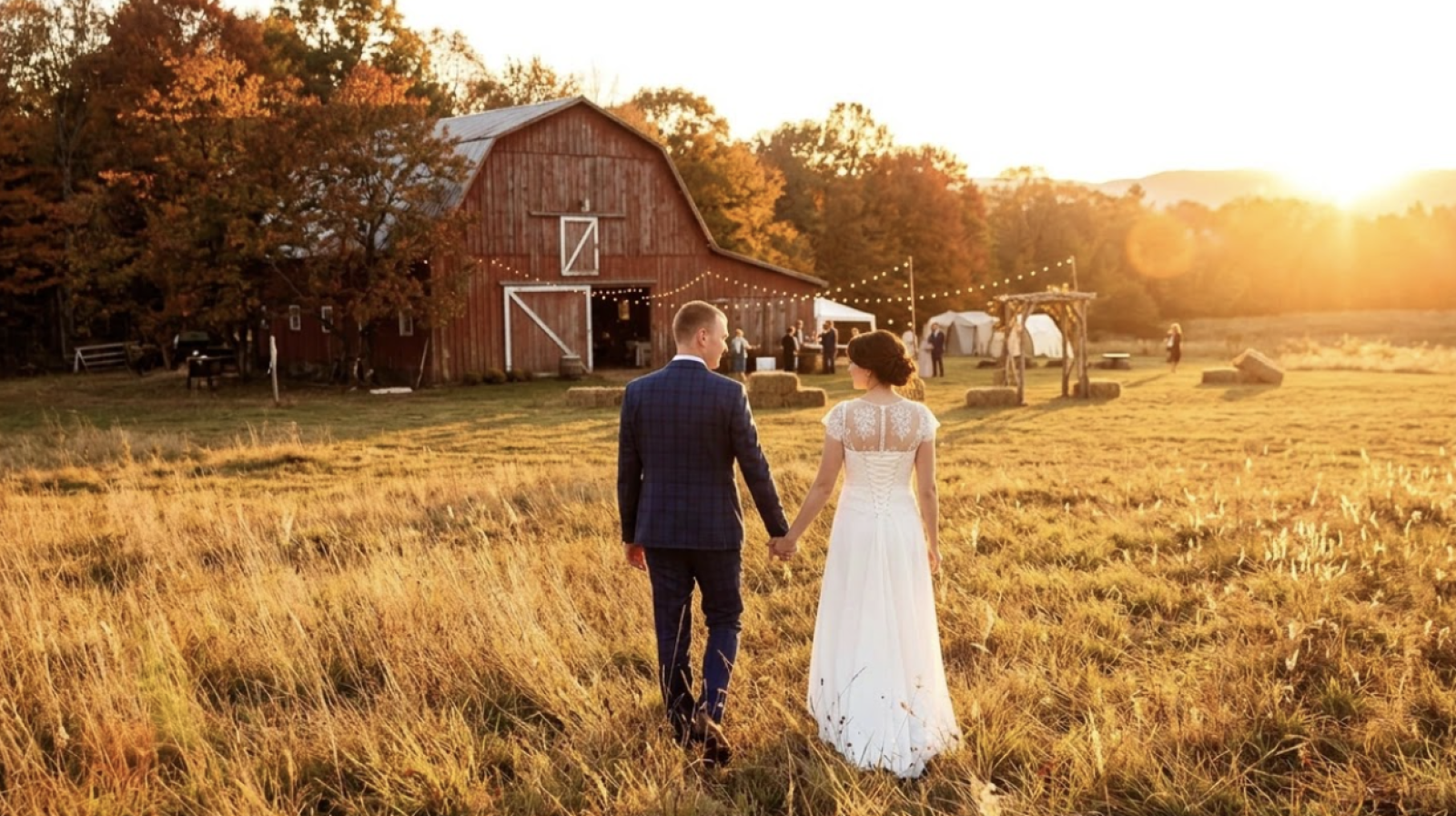
The hour before sunset brings soft, warm light that flatters everyone and makes a field glow. Check the sunset time for your date and plan the ceremony so you have time for portraits as the light turns golden. In South Bend, the sun sets around 9:20 p.m. in late June and around 6:40 p.m. at the end of October, and Chicago, on Central time, runs about an hour earlier on the clock. For props and poses, WeddingDay’s ideas for a rustic wedding photoshoot make the most of the farm as a backdrop, from a wagon wheel to a wooden rocking chair.
5. Heirloom quilts and vintage rugs
Lay vintage rugs down the aisle or in front of the arbor, and borrow family quilts to cover the bales. Quilts carry stories, and few things feel more Midwest than a grandmother’s quilt in the wedding photos.
6. A blanket basket for chilly ceremonies
For spring and fall weddings, set a basket of flannel blankets or throws at the end of each row. Guests wrap up during the ceremony and carry them over to the fire pit later.
Rustic reception ideas
7. Long farm tables
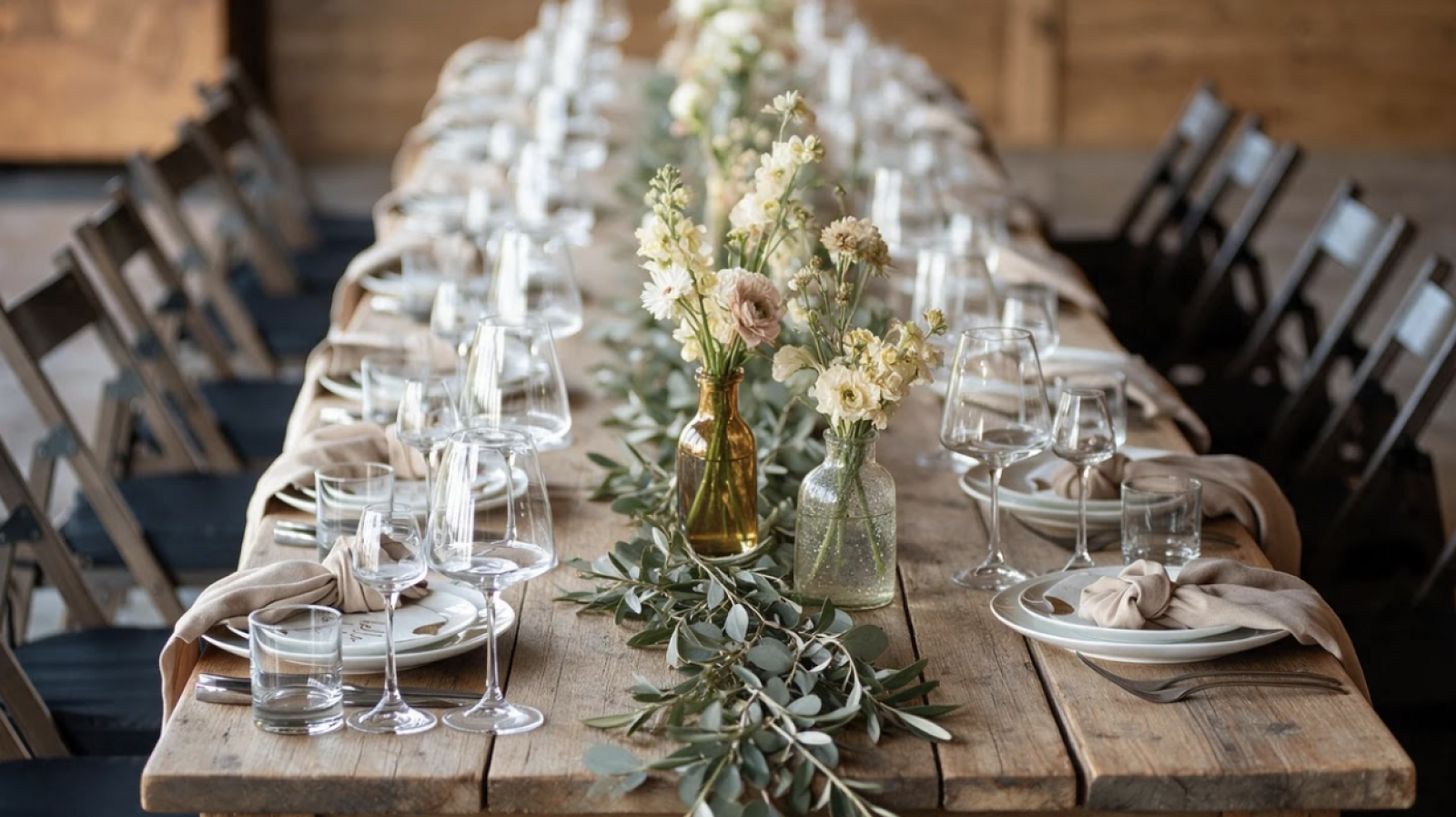
Long wooden tables seat guests close together and feel like a family dinner rather than a banquet. Leave the wood bare and add a runner of greenery, or use linen runners if the tables have seen better days. Depending on the room, long rows can take more or less floor space than rounds, so ask the venue for a floor plan before you book them, and leave room for servers to get down the aisles with full platters.
8. String lights overhead
Bistro lights strung across the rafters change a barn more than anything else you’ll add. Run them in long lines from end to end or as a canopy from a central point, and add dimmers if the venue’s power allows. Ask how many strands the barn’s circuits can handle before you buy or rent.
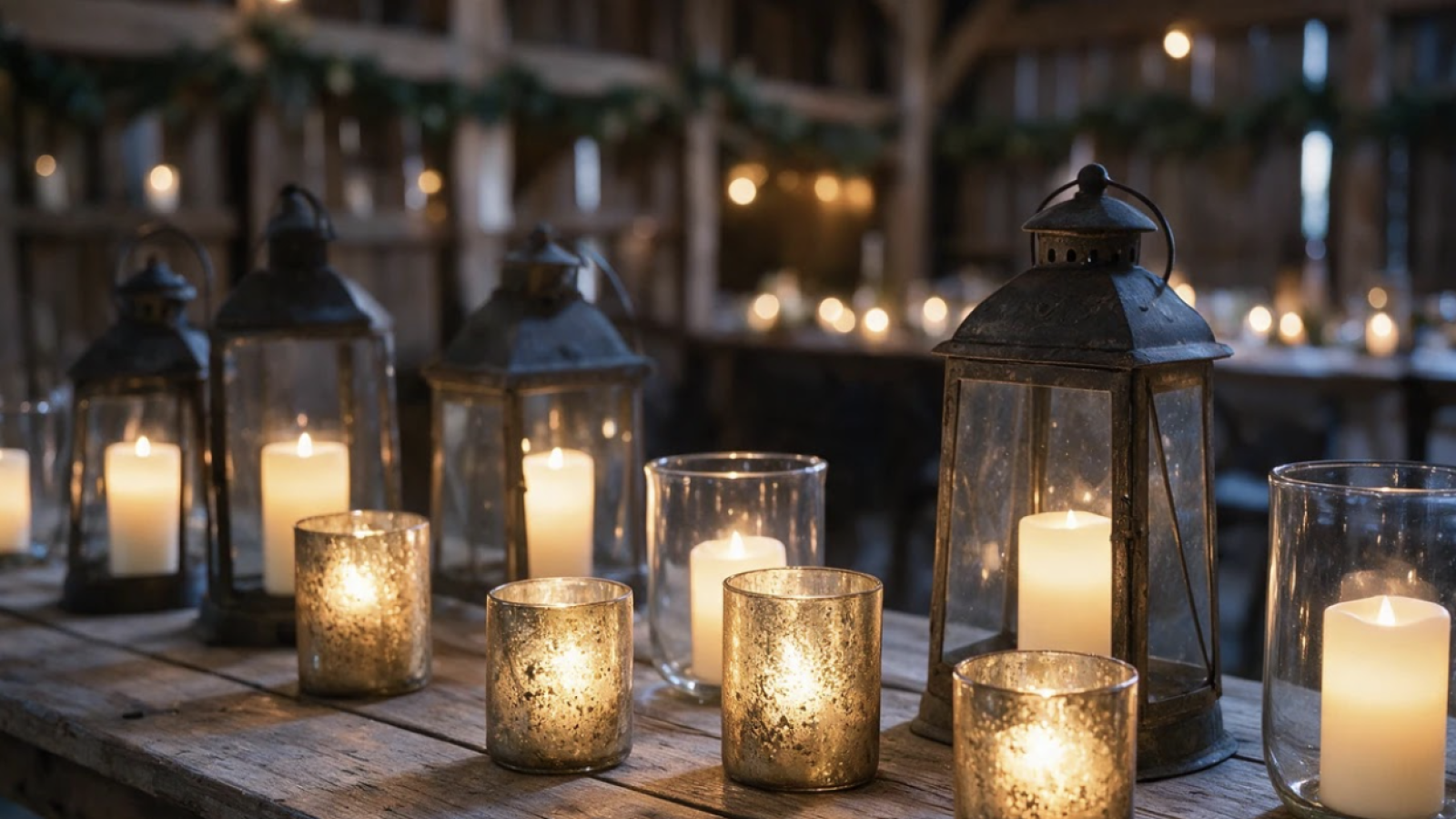
9. Flameless candles and lanterns
Candlelight is part of the rustic look, but barns are full of things that burn: dry wood, straw, fabric and dried flowers. The National Fire Protection Association advises keeping candles at least 12 inches from anything that can burn, and its figures show that more than half of home candle fires start when something that can burn, such as decorations or curtains, is too close to the flame. In a barn, that’s almost everything, so flameless candles are the safer choice. Some venues won’t allow anything else, so ask before you buy. Good LED candles with a warm flicker look convincing in lanterns and glass hurricanes, and they won’t blow out when the barn doors are open. Pick ones with a built-in timer and they’ll switch on at dusk without anyone going table to table.
10. Lounge corners
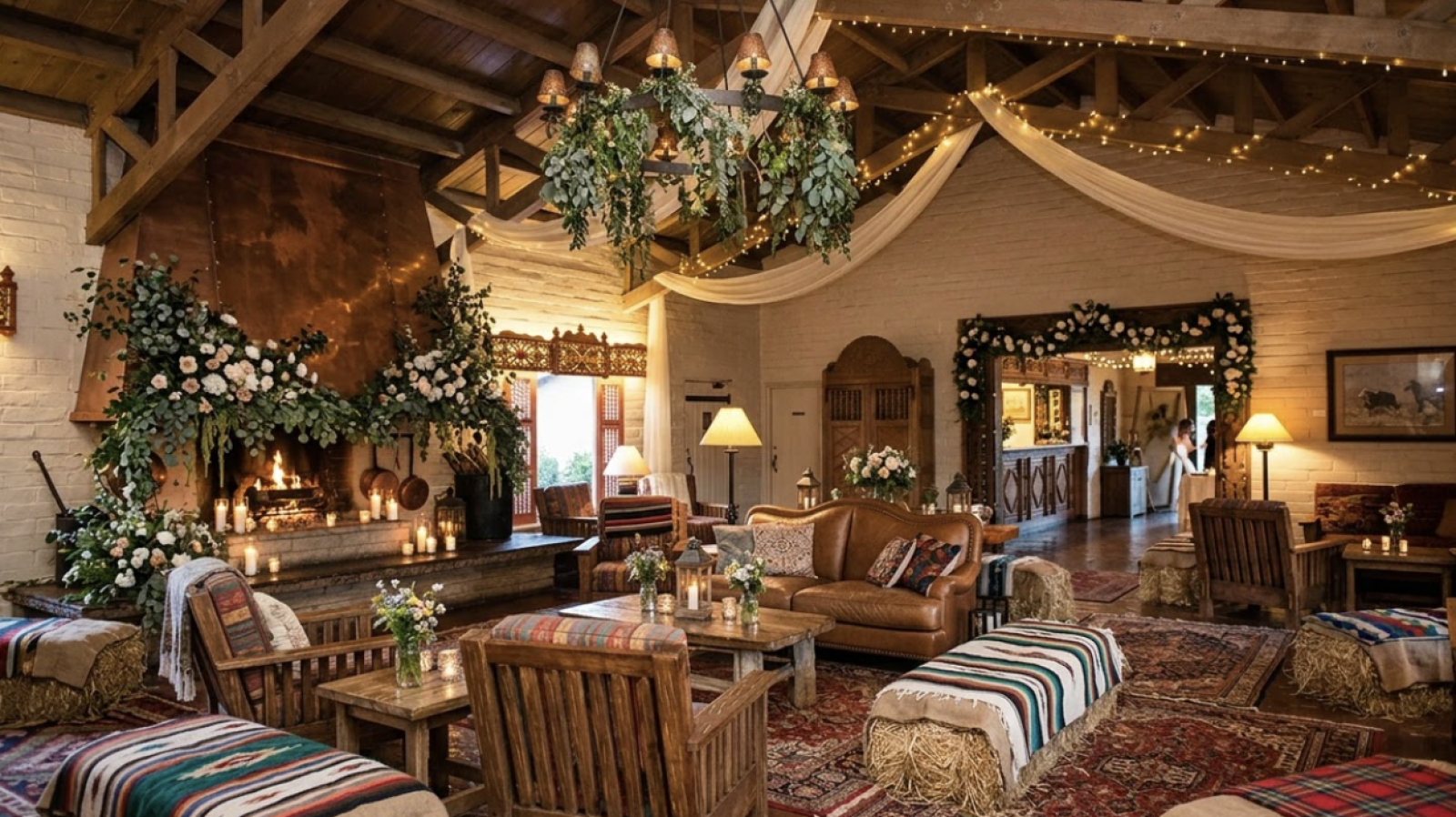
Not everyone wants to dance all night. Set up a couple of lounge areas with vintage sofas, leather armchairs, rugs and blanket-covered bales, so older guests and anyone in pinching shoes have somewhere to sit and talk.
11. A proper dance floor
Some barns have beautiful wooden floors. Others have concrete, gravel or packed dirt. If yours is the second kind, rent a dance floor. It’s safer, easier on heels and gives the room a clear center. Tell the rental company what’s underneath, because some portable floors need a level base.
12. Lawn games
Cornhole, giant Jenga, horseshoes and ring toss keep guests busy during cocktail hour, especially kids and anyone who doesn’t know many people. For more ways to entertain guests at your reception, WeddingDay has rounded up the crowd favorites, from food trucks to an on-site painter.
13. A fire pit lounge
On a cool evening, a fire pit ringed with chairs and blankets becomes the place everyone ends up. Keep it well away from the barn, straw bales and parked cars, check that your venue allows open fires, and put someone in charge of it all night, with a bucket of water or an extinguisher close by. Check with your county in the week before, too. Indiana lets local governments set stricter burning rules than the state does, and counties declare burn bans during dry spells, which tend to land in late summer and early fall.
14. A comfort station
Summer farm weddings come with bugs and sun. Set out bug spray, sunscreen, fans, bottled water and flip-flops for the dance floor on a small table near the entrance, plus bandages and stain wipes for the inevitable. At WeddingDay’s style shoot at Lake Max Meadows in Culver, Indiana, even the bug spray got its own sign, which is exactly the kind of detail guests remember.
Rustic wedding centerpieces and flowers
15. Greenery runners instead of tall arrangements
Garlands of eucalyptus, olive, ivy or whatever foliage grows locally running down long tables look lush, usually cost less than big arrangements and keep sightlines clear so guests can talk across the table. Add bud vases of seasonal blooms for color. If dinner is served family style, ask your florist to keep the garland narrow enough to leave room for the platters.
16. Local, seasonal flowers
Flowers grown nearby look right in a farm setting and can cost less, since they haven’t been shipped across the country. Think peonies in late spring, sunflowers and zinnias in summer, and dahlias, mums and branches of turning leaves in fall. Ask a local flower farm whether it sells buckets of blooms for DIY arrangements, and pick them up the day before so they get a night in cool water.
17. Dried flowers and grasses
Dried flowers, bunny tails and wheat stems add texture, last long after the wedding and won’t wilt in a hot barn. Mix them with fresh flowers for depth, but keep them away from candles, heaters and the fire pit, because dried arrangements catch fast.
18. Vintage vessels instead of mason jars
Mason jars had a long run. For a fresher look, use stoneware crocks, old milk bottles, enamel pitchers, copper pots or mismatched thrift-store glass. They look collected rather than bought in bulk, and there’s usually a relative with a cupboard full of them.
19. Potted herbs that double as favors
Small pots of rosemary, lavender or thyme make fragrant centerpieces, and guests can take one home at the end of the night. Add a tag with care instructions and your wedding date.
Rustic food ideas
20. A family-style dinner or barbecue
Platters passed down long tables suit a barn better than a formal plated meal, and they get guests talking to their neighbors. A barbecue with brisket, pulled pork, cornbread and slaw works just as well. Whichever you choose, include a hearty vegetarian main, not just extra sides. If the barn doesn’t have a kitchen, ask the caterer how they’ll keep the food hot.
21. A pie table
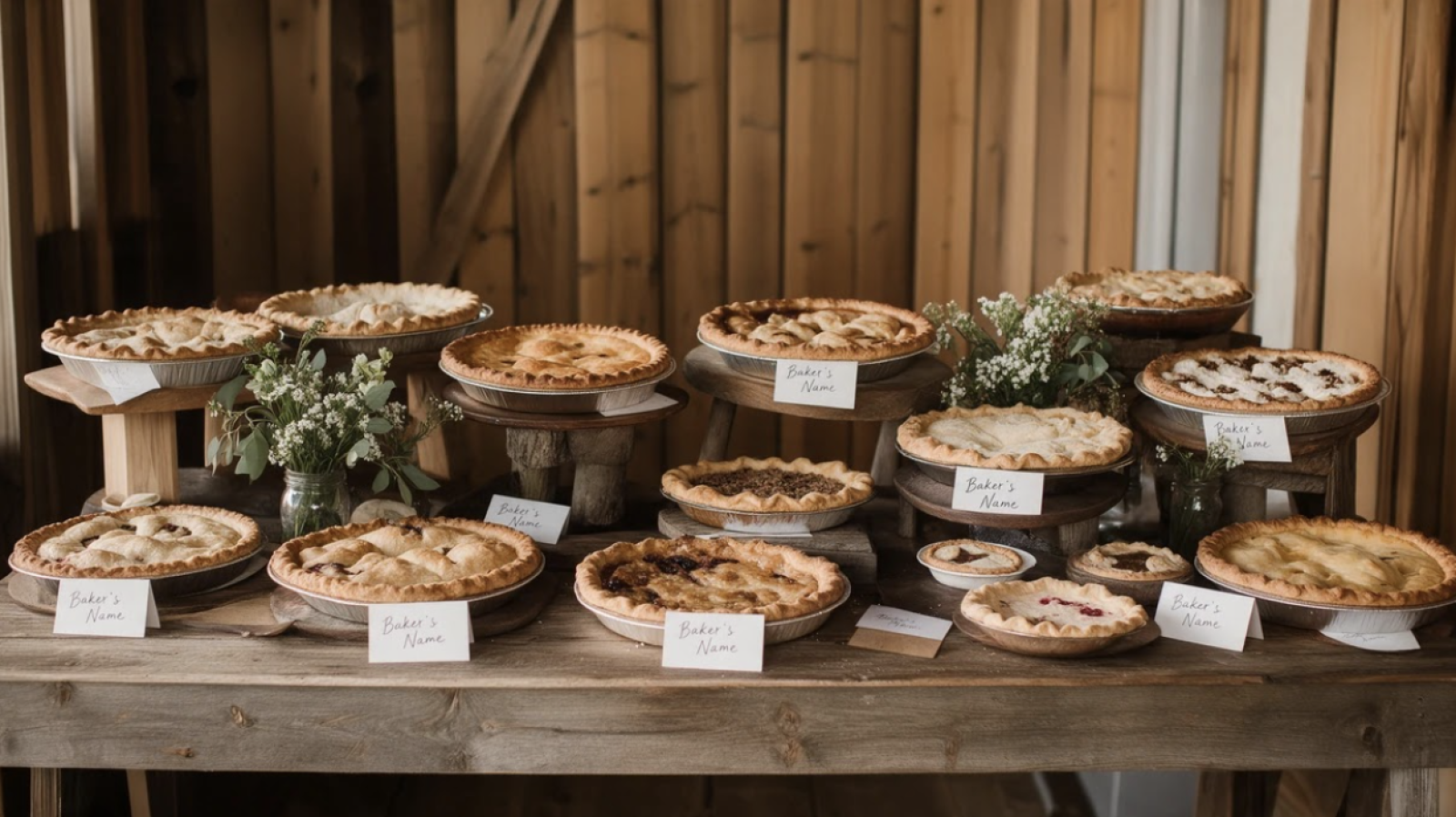
In the Midwest, a table of homemade or bakery pies, from apple and cherry to Indiana’s own sugar cream pie, the official state pie since 2009, makes a dessert guests talk about, either alongside a small cake or instead of one. Ask the family’s best bakers to contribute their signature pie and add a small card naming the baker. Count on about eight slices a pie, and check whether your caterer will cut and serve food they didn’t make, because some won’t.
22. Apple cider donuts for a fall wedding
Nothing tastes more like a Midwest fall than warm apple cider donuts from a local orchard. Serve them late in the evening or send guests home with a paper bag each, and pair them with hot cider when the temperature drops. Order well ahead, because orchards sell out on October weekends.
Rustic signs and stationery
23. Invitations with texture
Set the tone early with invitations on kraft or textured paper, botanical line drawings, wood-grain details or a hand-lettered script. Add a map of the farm or directions from the nearest highway on a details card, for the guests who stop trusting their phone two miles out.
24. A welcome sign at the barn door
A large welcome sign on an easel, a wine barrel or an old ladder greets guests as they arrive. Set the seating chart nearby on an old window frame or a wooden board, so guests find their tables before they head inside.
25. Directional and parking signs from the road
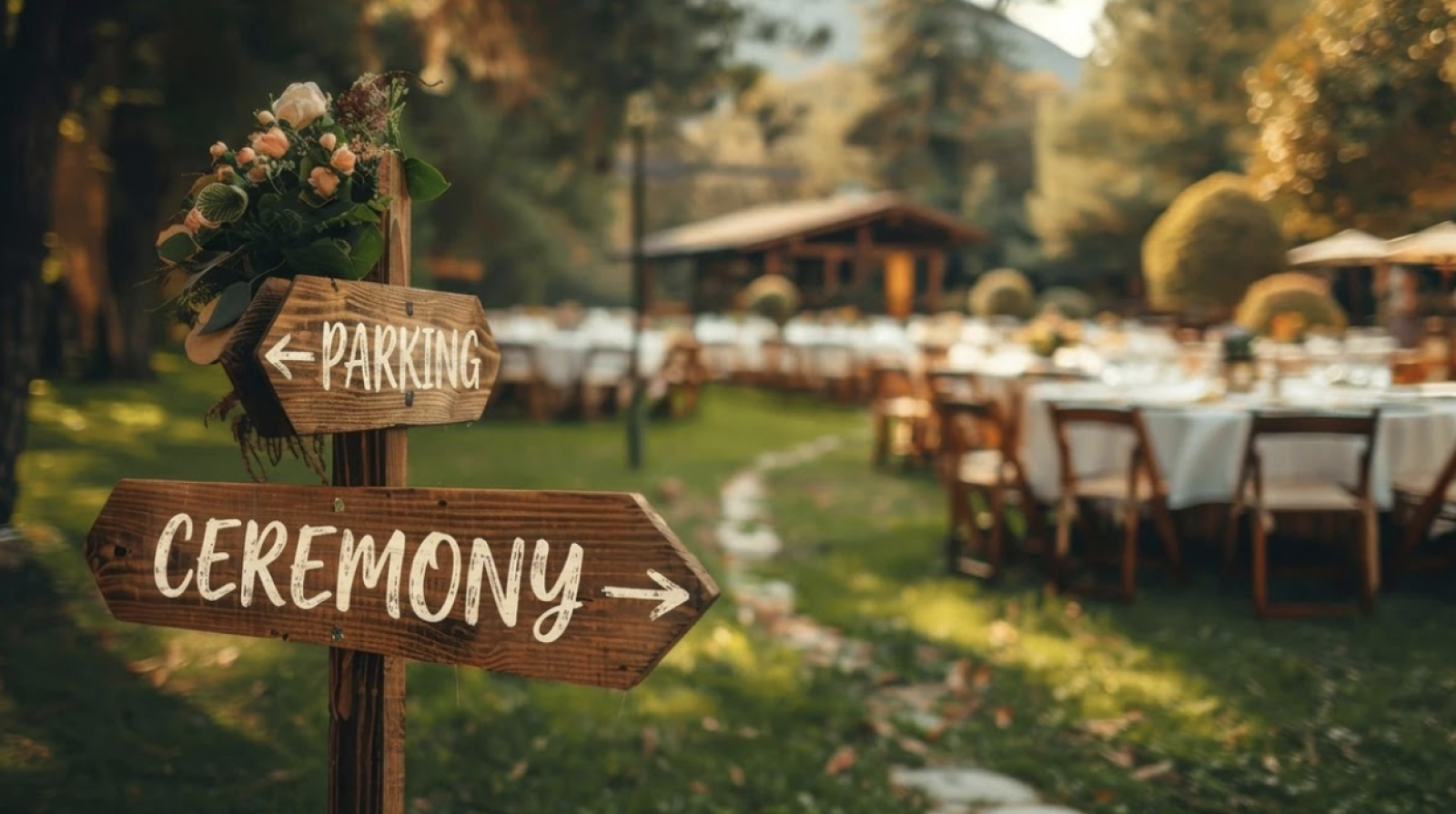
Farm venues need more signs than you’d expect: one at the road, one for parking, one pointing to the ceremony site and another to the restrooms after dark. Make the road signs big enough to read from a moving car and place them at every turn where a guest could go wrong. Wedding Templates has rustic designs for welcome, directional and parking signs you can edit in a free browser editor and print at a local print shop. For anything outside, ask the shop for weatherproof board rather than cardstock, and drive the route the evening before with your headlights on to check every sign is still standing and easy to see.
26. Menus and place cards on textured paper
Kraft or cotton paper suits dinner menus and place cards, or use a single large menu board for a family-style or buffet dinner. Tuck a sprig of rosemary or a dried flower into each napkin to finish the place setting.
Rustic wedding attire ideas
27. Boots, flats or block heels
Grass, gravel and barn floors are no friend to stilettos. Boots, flats or block heels let you walk the field, dance all night and stand for photos without sinking into the lawn. Break them in for a few weeks first, and keep a second pair for the dance floor. Tell guests about the ground on your wedding website so they can plan their shoes too.
28. Layers for cool evenings
Midwest temperatures can drop fast after sunset, especially in spring and fall. A faux fur wrap, a cropped sweater, a cape or a tailored jacket keeps you warm for the send-off and looks great in photos.
29. Earthy tones for the wedding party
Let the bridal party pick their own dresses in a family of earthy shades, such as sage, terracotta, rust or mustard, and dress the groom’s side in tan, olive, brown or navy suits. The colors sit naturally against wood and fields. Send everyone photos of the exact shades, or “sage” will arrive in five different greens.
30. Bouquets that mix fresh and dried flowers
Bouquets and boutonnieres that mix fresh blooms with dried grasses and seed heads hold up better in the heat and photograph well against weathered wood. Ask your florist which blooms will last through an outdoor ceremony in August, and which will droop before the vows.
Rustic wedding colors
Rustic palettes work best when they come from the setting itself: the wood, the fields and whatever’s in bloom. A few that suit barns and farms:
- Sage, cream and terracotta: soft and warm, and lovely in late spring and summer.
- Deep green, rust and gold: rich and cozy, and one of the most reliable rustic fall wedding colors.
- **Navy, dusty blue and lavender with greenery:** fresh and calm. Jaclyn and Dominic chose these colors for their modern barn celebration, pairing the barn’s rustic and modern touches with a few vintage details.
- Burgundy, blush and copper: romantic for late fall and early winter.
- **Warm yellow and fresh greenery:** bright and cheerful, especially for late summer weddings among the cornfields. It’s the palette from the Lake Max Meadows shoot, where the yellow hinted at the fall on its way.
- Black, white and natural wood: the modern farmhouse version, clean and graphic.
Whichever you choose, keep the palette to two or three main colors and let the wood, greenery and flowers do the rest. Test it by holding fabric swatches against the barn’s own boards, since weathered gray wood and honey-colored pine change how a color reads.
Rustic wedding ideas by season
The same barn looks completely different in May and in October, so let the season lead.
Spring. Lilacs in May and peonies in late May and June are hard to beat, along with tulips and flowering branches. The ground can be soft after spring rain, so ask about grass protection mats and warn guests about their shoes. Pastels with plenty of greenery suit the season, and a blanket basket helps once the sun goes down. Frost is still possible into May in the northern Midwest, so keep tender flowers inside until the ceremony.
Summer. Sunflowers, zinnias, cosmos and wildflowers are at their best. Heat is the main challenge. Schedule the ceremony for late afternoon, set up shade and fans, keep water flowing and have a tent or the barn ready for a passing thunderstorm. With the sun setting after 9 p.m. in South Bend and Indianapolis from June through mid-July, you can eat outside and save the barn for dancing.
Fall. September and October are peak barn season across the Midwest. Dahlias, mums, wheat, branches of turning leaves and heirloom pumpkins make easy decor, and apple orchards and cider are in full swing. Days get shorter fast, so check the sunset time and plan portraits earlier than you would in summer. By late October, sunset comes more than two and a half hours earlier than it did in June.
Winter. A heated barn with evergreen garlands, pinecones, plaid blankets and plenty of flameless candlelight feels properly cozy. Winter sunsets come early, around 5:15 p.m. in South Bend in mid-December, so plan photos for the middle of the afternoon, and keep the parking area and paths cleared, salted and well lit. Ask the venue who plows the lane if it snows.
How to keep a rustic wedding from looking dated
Rustic wedding decorations start to look dated when every table repeats the same handful of props. A few swaps keep the look current:
- Swap burlap for linen or cheesecloth. Same natural texture, softer finish, and it doesn’t shed fibers onto every dress.
- Swap mason jars for vintage vessels. Crocks, bottles and pitchers look found rather than ordered.
- Swap chalkboard puns for clean lettering. A sign guests can read at a glance beats a clever one they have to squint at.
- Pick one wood element and let it lead. Farm tables, wood slices or a wooden arbor, not all three at once.
- Mix textures. Pair wood with linen, ceramic, black metal and greenery so the space feels layered rather than themed.
- Lean on light. String lights and flameless candles do more for a barn than any amount of decor.
- Cut the sign count. A welcome sign, a seating chart and the directional signs guests actually need. Skip the dozen cute sayings.
Put together, that looks like long farm tables and a family-style dinner, fresh and dried flowers, a muted earthy palette and somewhere comfortable to sit.
Simple rustic wedding ideas on a budget
Rustic decor can be cheap, because the setting does a lot of the work. The venue is another story. A farm with no restrooms, power or tables can cost more to set up than a barn venue that has them, so compare the full rental list before you choose. A few ways to keep costs down:
- Borrow before you buy. Family quilts, crocks, lanterns, rugs and vintage chairs are probably sitting in someone’s attic.
- Buy flowers from a local flower farm and arrange them yourselves with a few friends the day before.
- Let greenery do the heavy lifting. Foliage usually costs less than flowers and fills a long table fast.
- Rent rather than buy big items like tables, lighting and a dance floor.
- Ask family to bake for a pie or dessert table instead of ordering a large tiered cake, and keep a small cake for cutting.
- Keep the decor list short. Choose a few things you love and do them well rather than filling every corner.
- Ask about off-peak dates. A Friday, a Sunday or a date in early spring often costs less than a Saturday in September.
Make a farm wedding comfortable for every guest
The prettiest farm wedding still falls flat if guests are hot, lost or stuck in a long line for the restroom. A few details make all the difference:
- Shorten the walk. If parking is far from the barn, arrange a golf cart or a shuttle for older guests and anyone with mobility needs. Grass and gravel are hard going in a wheelchair or with a walker, so plan a firm route from the drop-off point.
- Light the paths. Lanterns or solar stakes along the route to the parking area and restrooms keep everyone safe after dark. Solar stakes need a full day of sun to last the night, so set them out in the morning.
- Rent enough restrooms. If the venue doesn’t have permanent restrooms, a restroom trailer with lights and running water is worth the cost. Give the rental company your guest count and how long the bar is open, and let them size it.
- Plan for the temperature. Shade, water and fans in summer, and heaters and blankets in fall and winter.
- Save the good seats. Reserve chairs with backs near the front for grandparents and anyone who can’t sit on a bale.
- Tell guests what to expect. A short note on your wedding website about the terrain, the dress code and the weather helps people bring the right shoes and layers.
Rustic wedding FAQs
What is a rustic wedding theme?
A rustic wedding theme takes its inspiration from the countryside: natural wood, greenery, seasonal flowers, warm lighting and a relaxed atmosphere. It’s usually held in a barn, on a farm or outdoors, and often borrows from boho, farmhouse or vintage styles.
What are the must-haves for a rustic wedding?
A venue with natural character, comfortable seating, warm lighting such as string lights and flameless candles, and seasonal flowers or greenery. The practical ones matter just as much: enough restrooms, enough power, a weather plan and clear directions and signs for guests.
Can you use real candles at a barn wedding?
Only if your venue allows them, so ask before you buy any. The National Fire Protection Association advises keeping candles at least 12 inches from anything that can burn, which is hard to guarantee in a barn full of wood, straw and fabric. Flameless LED candles are the safer option and give the same warm glow.
What should guests wear to a rustic wedding?
Unless the invitation says otherwise, think dressy casual: sundresses, jumpsuits, dress pants and button-downs, or a casual suit. Guests should choose shoes they can wear on grass or gravel, such as block heels, flats or boots, and pack a layer for the evening.
What colors go with a rustic wedding?
Earthy palettes work best: sage and terracotta, deep green and rust, navy and dusty blue, burgundy and blush, or black and white with natural wood. Keep it to two or three main colors and let the greenery do the rest.
Is rustic still in style?
Yes, but it‘s grown up. You’ll see less burlap and fewer mason jars, and more linen, dried flowers, vintage vessels, family-style dinners and warm, layered lighting.
Let the setting lead
The best rustic weddings don’t fight their venue. They let the barn, the fields and the season do most of the decorating, then add warm light, good food and a few personal details. Get the practical pieces sorted early, from restrooms to parking signs, and you’ll get to enjoy the part that matters: a long table full of the people you love, under string lights, as the sun goes down over the fields.
are you a bride or groom-to-be?
We'd love to plan with you on weddingday-online.com. Let's get started!
are you a wedding extraordinaire?
Join WeddingDay Magazine in inspiring brides by partnering with us! See how here.



A Moody Garden Wedding
Allyson Hutchison | September 16, 2026

12 Detroit Proposal Locales
WeddingDay | November 21, 2025
A Real Chicagoland Wedding
Allyson Hutchison | June 17, 2026
A Modern Elegant Wedding
Allyson Hutchison | June 10, 2026

A Sunset Fairytale Engagement
Allyson Hutchison | April 1, 2025
Join the conversation
Log in or register to post comments