
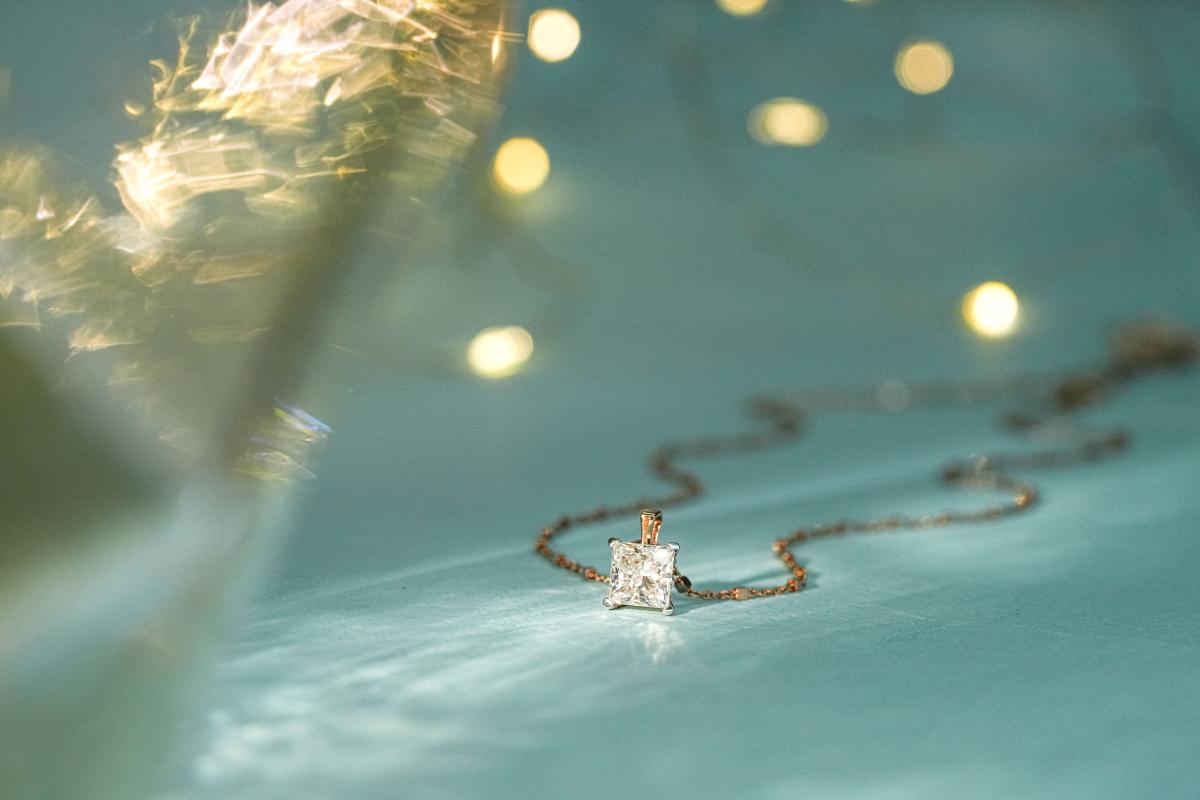

You have 2 listings open in adjacent tabs. Both stones are round, 2 carats, E color and VS1 clarity, and both come with a report from the same grading laboratory. One is priced at $2,100 and the other at $2,900, and the photographs look identical at the size a phone screen allows.
The reports do not explain the $800. The stones usually do, because growth method, post-growth treatment, proportions and behavior under ultraviolet light all vary between stones that share a color and clarity grade, and only some of that appears on paper.
Report Formats After October 2025
Grading reports for lab-grown stones stopped following a single format in 2025. On October 1 of that year, the Gemological Institute of America replaced letter grades on its lab-grown reports with 2 descriptors, Premium and Standard. A Premium stone must be D color and VVS clarity or better, with Excellent polish and symmetry and, for a round, an Excellent cut grade. Standard requires E through J color and VS clarity with Very Good finish. A stone below that floor receives no quality descriptor at all.
The institute's stated reason was that most lab-grown stones fall into a very narrow range of color and clarity. Since 2022, 95% of the lab-grown stones it graded were D to F color, and 98% were VS1 or better. Under that system, an E stone and a J stone can receive the same word on the same style of report. The institute charges $15 per carat for the report and $5 to evaluate a stone that fails to qualify for either descriptor.
The International Gemological Institute still issues full letter grades for lab-grown material. Comparing a Standard stone against an F VS1 from the other laboratory is a comparison between 2 different systems, and neither document settles the question alone.
Growth Method and Post-Growth Treatment
Lab-grown stones come from 2 processes. High-pressure, high-temperature growth recreates the conditions of natural formation inside a press, using a metal solvent. The other method builds the crystal from a carbon-rich gas, a thin layer at a time, on a flat seed plate.
Speed causes most of the trouble with the gas method. Producers who grow crystals quickly tend to get a brown or gray tint from defects in the lattice, and many then heat and compress the finished crystal to remove the color. Reports note this with a comment on post-growth processing. Sellers who can document an untreated stone market it as "as grown" and charge more for it.
Treatment is legal and permanent, though heavily processed stones can look faintly milky, and the haze increases with the amount of treatment applied.
Under the Federal Trade Commission's guides for the jewelry industry, a seller must disclose a treatment that is not permanent, that requires special care, or that affects the value of the stone. Growth-method disclosure is expected across the trade, though the exact wording on reports varies by laboratory and by year of issue.
Haze, Strain and Graining
Haze seldom appears as a line item on a report. It comes from internal strain and from fine growth lines called graining, and a stone can be VS1 on paper and still look soft to the eye. In finished lab grown diamond rings, haze is easiest to judge from a video filmed in ordinary room light, where a clean stone shows sharp contrast between its bright and dark facets.
A hazy stone shows gray contrast and soft facet edges instead. The difference is visible on a phone when the video is paused at several angles, and it is invisible in the still photographs most listings lead with. Retail spotlights also hide it, since strong overhead light brightens every facet at once.
Viewed between crossed polarizing filters, a stone grown from gas often shows banded strain in bright interference colors, while a press-grown stone shows almost none. The banding follows the principles of photoelasticity, in which internal stress makes a transparent material split polarized light into colored fringes, and a gemologist with a polariscope can photograph it in a few minutes.
Proportions and Light Return
Stones with matching color and clarity can differ sharply in brightness because of their angles. The reference model for the round brilliant dates to 1919, when Marcel Tolkowsky published calculations that balanced brilliance against fire.
Cutters today generally aim for a table between 53% and 58% of the stone's width and a total depth between 61% and 62.5%. A stone cut deeper than that puts more of its weight below the girdle, where the eye cannot see it, so it looks smaller face-up than its carat figure suggests. Light also escapes through the sides or bottom of a stone that is too deep or too shallow, and the result is a darker face.
The institute's new quality assessment includes a cut grade only for rounds, so an oval or emerald shape has to be judged on its proportions and on video.
Fluorescence and Phosphorescence
Colorless stones grown in a press often contain traces of boron, and many show a light blue glow that continues for seconds or minutes after the lamp goes off. The afterglow is phosphorescence, the same slow release of absorbed energy that makes glow-in-the-dark materials shine after the lights go out. Untreated stones grown from gas tend to fluoresce orange-red under deep ultraviolet instead.
Both effects are faint in daylight and obvious under the black lights used in some bars and clubs, where one stone in a matched pair may glow and the other may not. A buyer who wants 2 stones to match in every setting, for earrings or a 3-stone design, should ask for ultraviolet photographs of both.
Price Gaps Between Near-Identical Stones
Analyst Edahn Golan's index shows wholesale prices falling 26% in 2025 and another 13% year over year in the second quarter of 2026, for a 96% decline since 2018. Retail markups barely changed. Analyst Paul Zimnisky found in May 2026 that retailers were adding more than 80% to the wholesale price, a figure that moved by only 1 or 2 points from 2025.
A seller who restocked recently can therefore undercut one still pricing older inventory, with no quality difference between the 2 stones. Resale offers no correction later, since lab-grown stones have almost no secondhand market. One New York dealer told the trade magazine JCK about a customer who paid $25,000 for a 5-carat lab-grown ring early in the decade and now has nothing to sell it for. The purchase price is the only price that will ever apply.
A Single Request Before Checkout
Ask the seller for the report number and for a video of the stone filmed under ordinary room light, then look up the report on the grading laboratory's own website before paying. The lookup confirms the growth method, any treatment comment and the descriptor or letter grades. The video shows the haze and contrast that the report leaves out. If a seller cannot supply both within a day, move on to the next listing and make the same request there.
are you a bride or groom-to-be?
We'd love to plan with you on weddingday-online.com. Let's get started!
are you a wedding extraordinaire?
Join WeddingDay Magazine in inspiring brides by partnering with us! See how here.


Planning Tips And Tricks
WeddingDay | May 8, 2021

Small Reception Inspo
Chrysa Keenon | December 10, 2020


A Cliffside Wisconsin Engagement
Chrysa Keenon | May 3, 2021
Starting a Planning Business
WeddingDay | October 13, 2026
Showcasing Special Events
WeddingDay | October 6, 2026
Join the conversation
Log in or register to post comments